The 2011 Patagonia Expedition Adventure Race: The Last Wild Race
Report report by Mark Lattanzi of Team Dancing Pandas
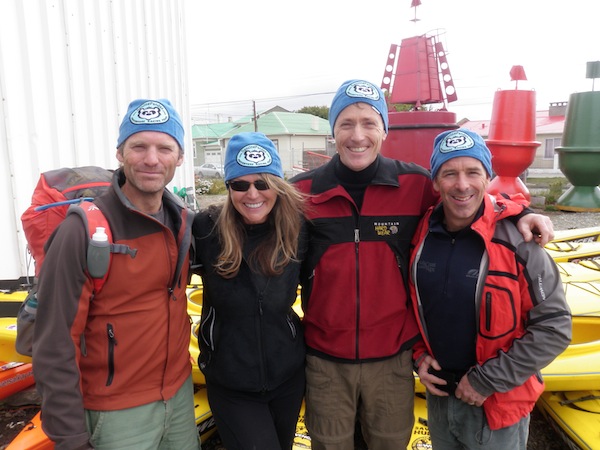 |
The Dancing Pandas
Noel Duffy
Masha Glanville
Mark Lattanzi
Pete Spagnoli
|
5-Feb: Gear Check-In
Once again, I find myself in Punta Arenas in a warehouse on the waterfront.
Team Dancing Pandas (myself, Masha Glanville, Pete Spagnoli, and Noel Duffy)
are checking in. There is gear everywhere and teams going to and fro trying to
get everything checked off. It all takes about 4 hours and at the end of the
day, only the Dancing Pandas have all the required gear. Woohoo! The other thirteen
teams were all missing one piece or another and must return to show it to the
race officials. Even the well-organized and color-coordinated East Wind team
from Japan was missing something.
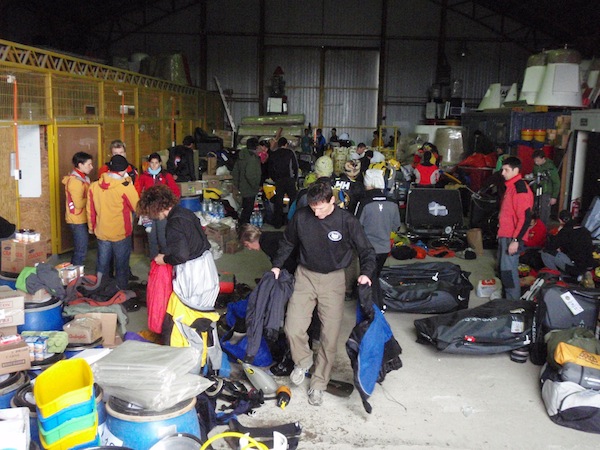
We checked in our kayak gear bag, our mountain bikes (in boxes) and bike kit bag,
the climbing gear bag, and the final bag (to get after the race). We still
have to pack 5 food/clothing bags, but we will do those after we get the maps
of the race course. For now, we are done for the day. Tomorrow, we'd return
6-Feb: Skills Testing
We returned to the warehouse at 11am for the kayak skills test. Basically, we donned our kayaking equipment
and took two boats out into the Strait of Magellan and flipped each boat and
performed a rescue (get back into the boat). This had two purposes. 1) It showed
that race staff that we can safely self rescue in an emergency, and 2) it got
all of our kayaking gear wet, so to aid to the misery of the race when we reach
the first kayaking leg and have to put on all wet gear.
There was supposed to be a climbing skills test as well, but it was cancelled
as was the official "climbing" leg of the race. We still ended up climbing and
using our safety rope to ascend a mountain pass during the first trekking leg.
We returned to La Casa Escondida for the afternoon and then back to Punta
Arenas at 7pm for the opening ceremony and the distribution of the course maps.
Everyone was excited to get the course and see how many stages there were,
which discipline was first, and where the race would start and finish.
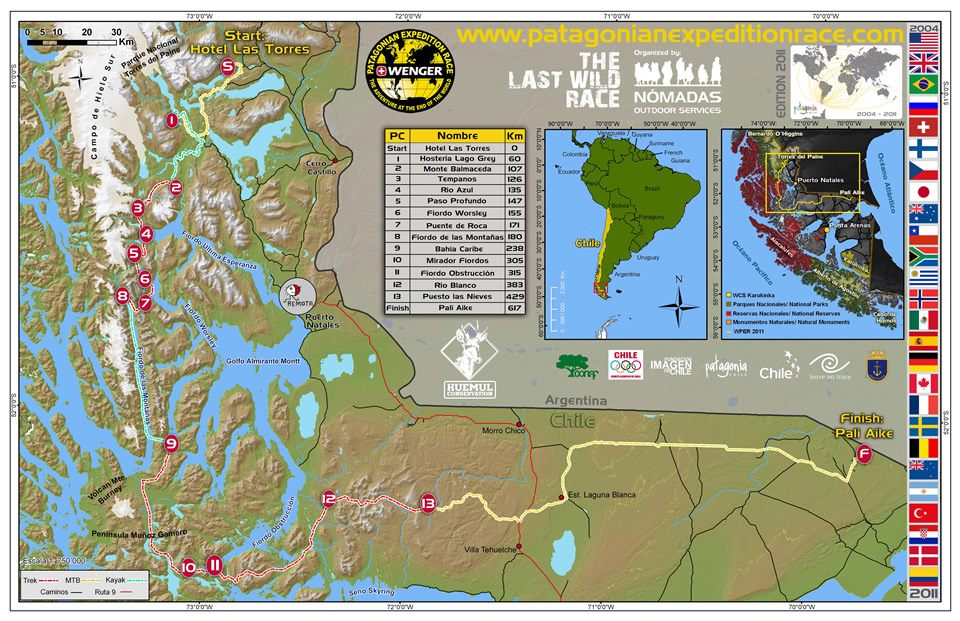
Here's a brief synopsis of the course:
- Start at Hotel Las Torres in Torres Del Paine National Park.
- Stage 1: Cycle 60km across the southern boundary of Torres Del Paine
- Stage 2: Kayak 50km down Rio Grey and Rio Serrano.
- Stage 3: Trek 75km across two mountain passes and along some rivers and lakes.
- Stage 4: Kayak 60km in the Fjord of the Mountains - passing 6-7 glaciers along the way.
- Stage 5: Trek 190km across several mountain passes and through several river valleys. Truly a monster trek.
- Stage 6: Bike 180km across the eastern plains of Chile to Pali Aike National park.`
- The finish is in one of the volcanic craters in Pali Aike.
7-Feb: Packing
Now that we had the course, we packed our 5 food/gear drop bags. It was a bit
crazy trying to plan when to put extra sets of dry clothes and plan how much
food to put where. In the end, we had 5 large duffles stuffed with food and
dry bags. It all seemed to make sense when we did it, but on the course, it's
amazing how the item you really wanted never seemed to be in the right place.
After dropping off the food bags, we loaded on to the bus for the 6+ hour ride
up to Torres Del Paine and the infamous cookout to stat the race. We were
greeted at the park entrance by a bunch of whooping gauchos on horseback
carrying flags. They escorted us to the grand lamb barbecue and our last
evening of hot food and warm lodgings. They race would start at 7am (or so)
tomorrow morning.
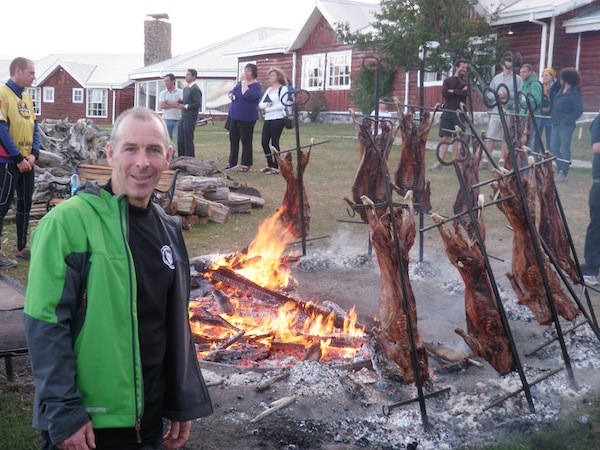
Of course, Noel and I had a fine bottle of Chilean wine with dinner and were
looking for another when Masha insisted that we go set up the tent and go to
bed.
8-Feb: And The Race Begins
Stage 1: 60km Mountain Bike (Start - CP1)
We awoke at 6am to a fine sunny morning and breakfast. The race was to start
at 7am, but alas, no bikes had yet arrived. To get to where we were required
traversing a small bridge. It turns out that the truck containing the bikes
was too heavy (and wide) to get across the bridge. So, a small van was sent to
get the bikes in several (7?) trips.
Once all the bike boxes had arrived, each team assembled their bikes and lined
up behind a wall of gauchos on horseback for the race start. At 9:30am, we
were finally off! We expected the first bike leg to take 3.5 to 4 hours, but
we hadn't planned on the crazy Patagonian winds. At one point, we had to ditch
our bikes nd run for cover as the fierce wind blew gravel and rocks at us like
the spray from machine guns.
Video of Us and Two Other Teams in Wind storm
Several times throughout the ride, we were stopped dead in our tracks or
worse, blown off of our bikes. The ride took the lead teams 4 hours 15
minutes. We finished it in just under 5 hours - having to stop for 15 minutes
to fix Masha's rear derailleur. She had snapped the cable on one of the steep
uphills.
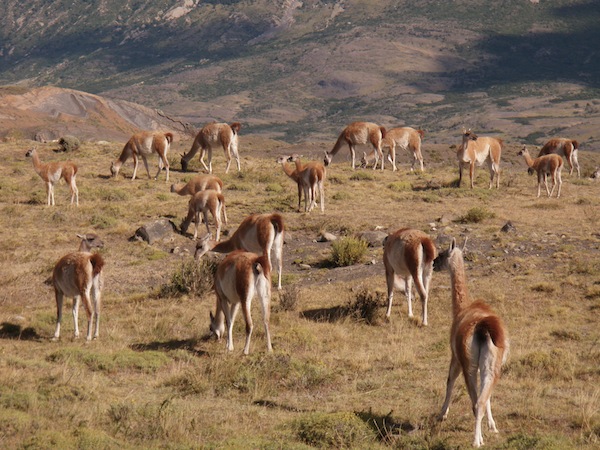
All along the road were guanacos - a Chilean animal related to the llama.
We arrived at Lago Grey and all of the teams ahead of us were waiting to start
the paddle. The Navy wasn't letting anyone on to the water until the winds
died down. So, the race was on hold for a bit.
Stage 2: 50km Kayak (CP1 - CP2)
The wind subsided and we all left in mass around 4:30pm. Rio Grey and Rio
Serrano are both glacial rivers and have decent flow. Everyone made good time.
Great scenery as well. There was one waterfall to portage, but otherwise it
was a pretty typical river paddle. The last half was mostly into the wind,
which sometimes slowed us to a crawl, but we made it to the end in about 5
hours. One spectacular site along the way was at the confluence of the two
rivers - Grey and Serrano. Rio Grey was still glacial grey whereas Rio Serrano
was a more pale green. Where the two came together was a distinct line running
for a 100 meters before the colors washed together. The race was truly
underway now.
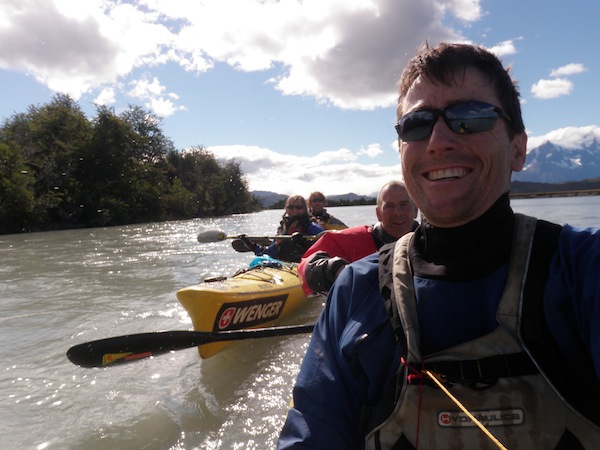
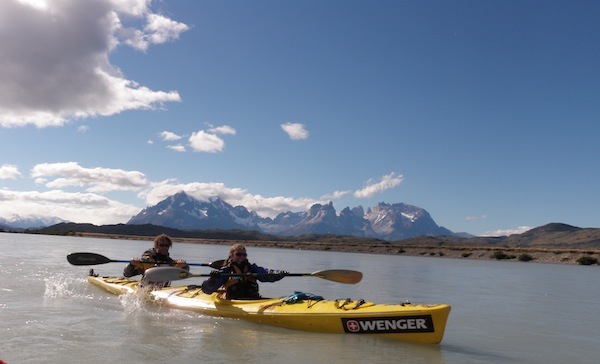
Kayaking On Rio Grey With Torres Del Paine In The Background
Stage 3: 75km Trek (CP2- CP8)
Stage 3 was a big trek that had 6 checkpoints along the way. We would get our
first food bag at CP4 - about 28km into the trek. We were already a bit short
on food starting the trek, but we figured we'd be okay until CP4.
At this point, Masha realized that she had lost her Synthroid medication
somehow. Bad news for us because it regulated her thyroid for her - which
controls the body's energy levels and regulates the heating/cooling systems.
Without the drug, she was likely to get more and more lethargic and slow.
Still, we started the trek at twilight (around 10pm) in high spirits. We were supposed to follow a
river up to a lake and then traverse around the alpine lake.
We began by following the river but eventually started following a cow path up
the ridge. High ground looked appealing so we continued upwards, but
eventually reached an uncrossable canyon with steep slippery slides down to a rocky river. After a bit of
deliberating, we returned to the main river below and slowly picked our way upriver
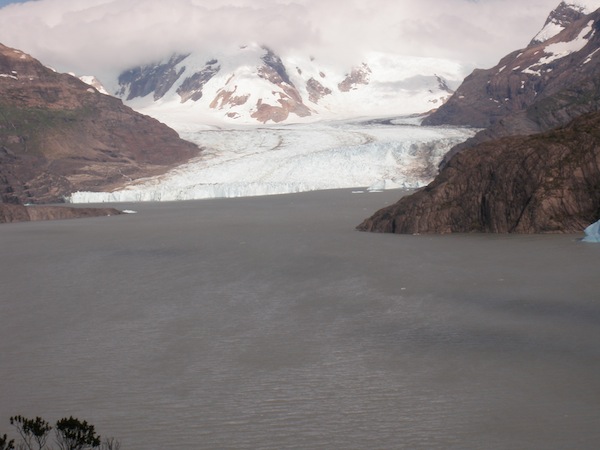
all night long. We reached the lake by morning. It was a spectacular site -
fed by two large glaciers and filled with floating icebergs.
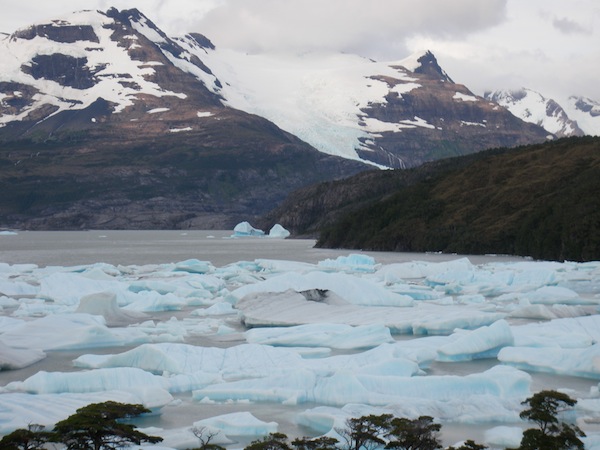
Icebergs In An Alpine Lake
Glacier Feeding The Alpine Lake
We then had to traverse along the lake shore to the far end - another 7km.
We'd only covered about 10km from 9pm the night before. We finally traversed
the lake to CP3 by 12pm. All told, we had hiked 17km in about 14 hours.
Our estimated pace was 2km/hour. We were barely doing better than 1km/hour.
Yikes!
9-Feb: On to CP4
It was 10km from CP3 to CP4 and there was only 1 major river to cross. It
turned out to be chest deep and we'd found some trees to make the crossing a
bit easier. We crossed in early afternoon so we dried out quickly. The rest
of the trek was in mostly open turba and field and then 2km along a river to
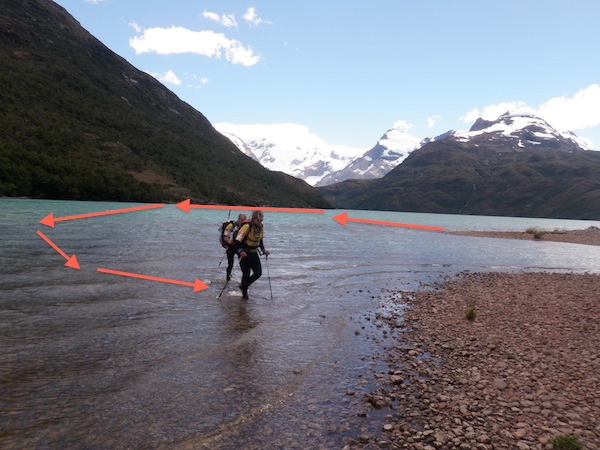
the CP. We made decent time and the only snafu was when we were following the
river. A side river came in and blocked our path. We ended up following an
underwater berm of rocks in a big C out into the main river and then back to
the shore. Surprisingly, it never got more than knee-deep. Odd, since the
incoming channel was much deeper.
At one point, Noel and I stopped to survey the coming landscape and I realized
that my Nuun had become waterlogged. I took out the last two (wet) tablets and
gave one to him. I popped the other into my mouth. He asks, "Can you eat
these?" as he pops the other into his mouth. "No," I say. "Not really" - as
both tablets start spewing out CO2 in our mouths and up our noses. We're both
laughing and foaming at the mouth trying not to choke and we stood laughing and
gagging on the ridge. At any rate, we got our electrolytes for the day albeit
not in the traditional way.
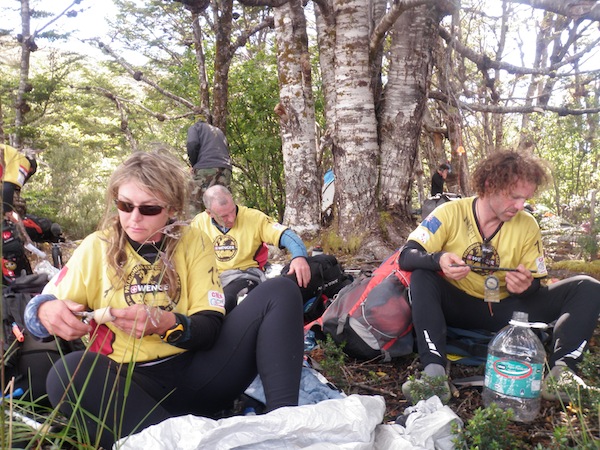
We made CP4 in 4 1/2 hours - clocking in our best pace of 2.25 km/hr.
We arrived at CP4 in 6th place with East Wind, and the Croatians arriving
shortly after us.
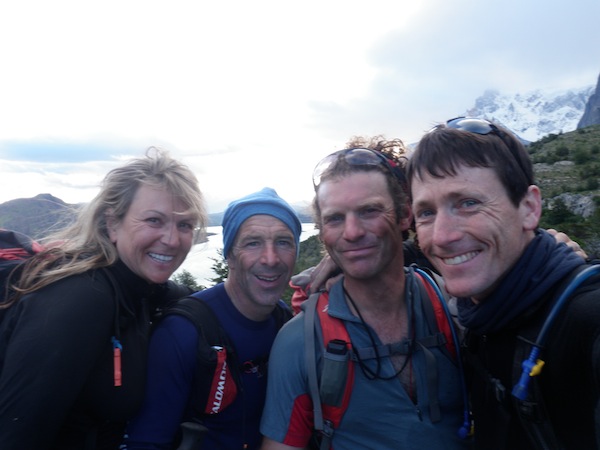
The Dancing Pandas At CP4
On To CP5 and Our First Mountain Crossing
We had a big feed, did some foot care ad left CP4 in high spirits. East Wind
and the Ad Natura had left 30 minutes before us, but we managed to catch them
at the first big river crossing. We were all trying to figure out how to cross
it as it was over 40m wide and fast flowing out into the ocean. Upriver seemed
to be all rapids. As we arrived on the scene, East Wind had sent a guy across
swimming to the far shore where there was a tandem kayak! Good news. We could
all ferry across. I went with the last guy from East Wind and then came back
with the boat. Masha and Pete weren't quite ready, so we decided to let the
Croatians use the boat first (they had just shown up). So, Stephen got in the
boat with me so we could ferry me across and then they could use the boat. I'm
not exactly sure what happened next except that as we crossed the big eddy line,
we flipped the boat. We quickly were swept out into the ocean in the fast
current. It took about 10 minutes to get the boat, paddles, and packs all to
the far shore. Everything I had was wet as I wasn't prepared for a swim at
that moment. Same with Stephen's stuff. We looked a bit like drowned rats.
I took the boat back alone, and then Noel joined me and we ferried across. I
got out and he ferried the rest of the team across whil I sorted my wet mass of
gear.
The rest of our team got across without much more trouble as I finished putting
my gear back together. Then I realized that I no longer had my map case. It
must have become dislodged and floated out to sea. Damn.
At this point, the Croatians were ferrying across and flipped the boat again.
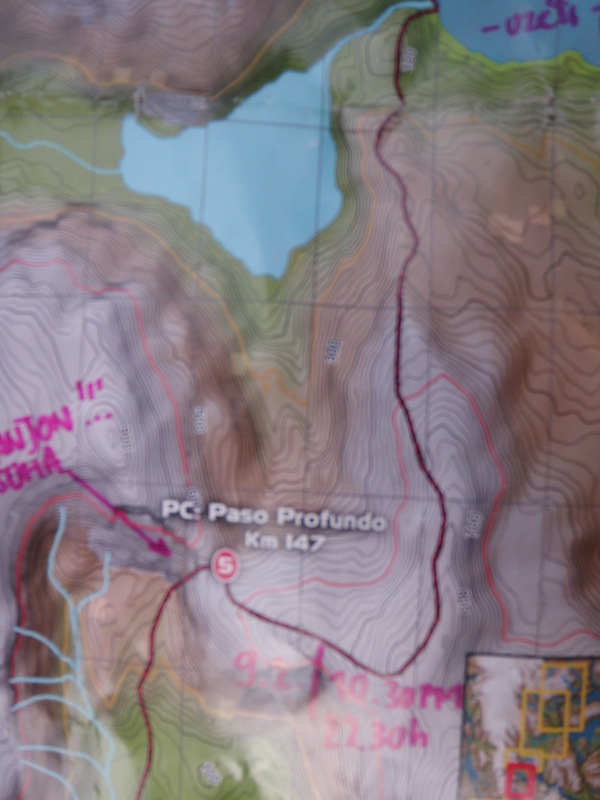
We asked the one on our side if we could look at his maps as we had just lost
ours. He agreed, so we took pictures of all of their maps for the next trek on
my digital camera and used it to navigate the rest of the trek. It made it a
bit more tricky, but fun actually, as we had to keep memorizing little pieces
of the map.
With that little challenge all worked out, we set off on the big climb up to
the mountain crossing and CP5. We reached the top just after midnight and
descended a bit down a ridge on the other side to CP5. East Wind was a bit
behind us and Ad Natura a bit ahead.
10-Feb: Still Trekking
The trek from CP5 to CP6 was only 10km but it included dropping into a slot
canyon and then basically descending the mountain on a wet vegetated cliff. By
the time we reached the bottom, 3 hours had passed and we'd gone less than
2km. We decided it was time to sleep. It took us 20 minutes to find a
relatively dry spot and pith the tent. The Croatians were camped not too far
away. We slept for almost 3 hours and awoke to a beautiful morning at the top
of a valley. Off in the distance was a large lake with a peninsula sticking
out into it. CP6 was at the end of the peninsula - a mere 8k away. It took us
all morning to get there.
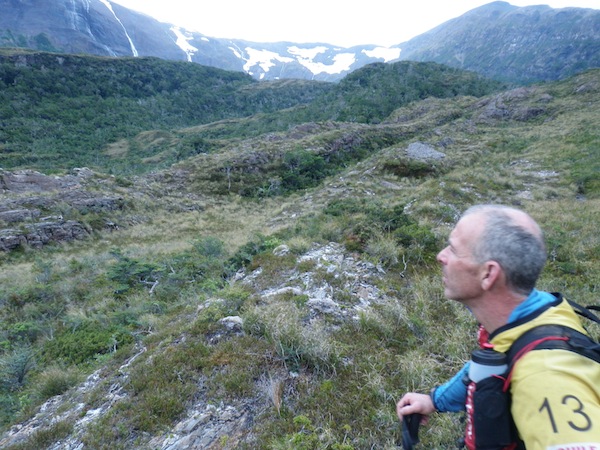
As we hiked down the peninsula, we opted to stay to the left. In the end, as
we assessed our chosen route, we realized that if we didn't attain the high
ground, it was going to be a long day. NOel commented, "Well, this is going to
take a long time. Our kids might make it." we had to ascend up the highest
ridge to get to the end of the peninsula. So, our route had us climbing a
small 20 foot cliff. It was quite entertaining with Noel going up one bad way
and me trying another. Both routes involved climbing trees and then
transferring back to the cliff. Once on top, we could see the easier route and
directed Pete and Masha to it. All told, it took 30-40 minutes to get back to
the center ridge - enough time for East Wind to pass us again.
We arrived at CP6 at noon. CP7 was at the far end of a long lake chain, so we
would be coasteering for a bit. The route started with a water crossing off
the peninsula. Race officials had strung a line across, but it still meant
getting in the water over our heads. As it was right at CP6, film crews were
on hand to capture the whole crossing. Nothing too surprising other than the
water temperature - it was breath-takingly cold.
It was 12 more kilometers to CP7 and with the lake shore travel and occasional
foray up into the turba to avoid cliffs, it took us until midnight to get to
CP7. 12km in 12 hours. Unbelievable.
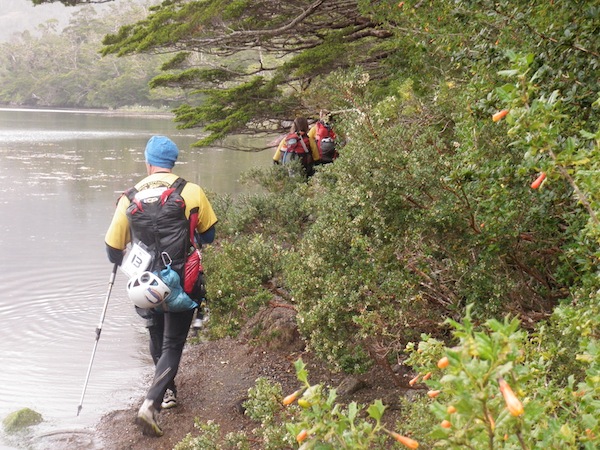
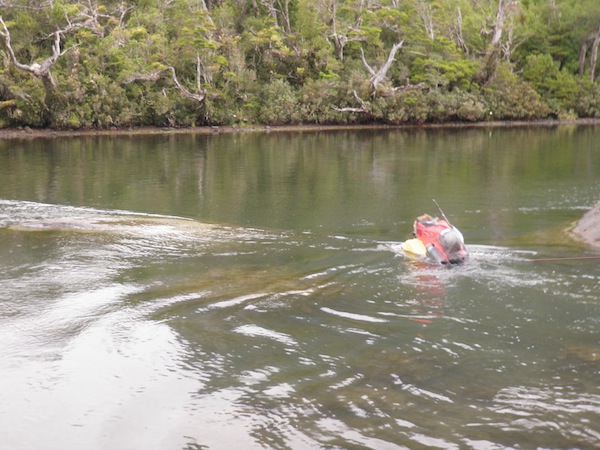
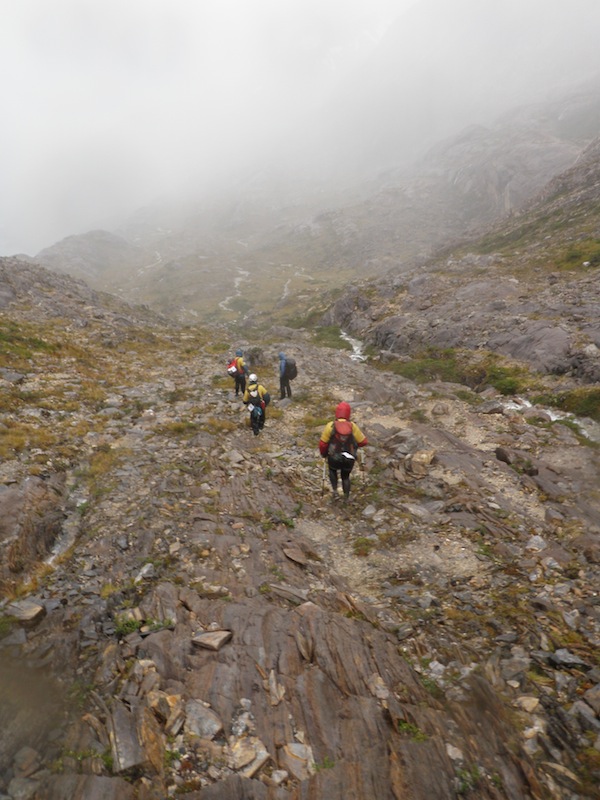
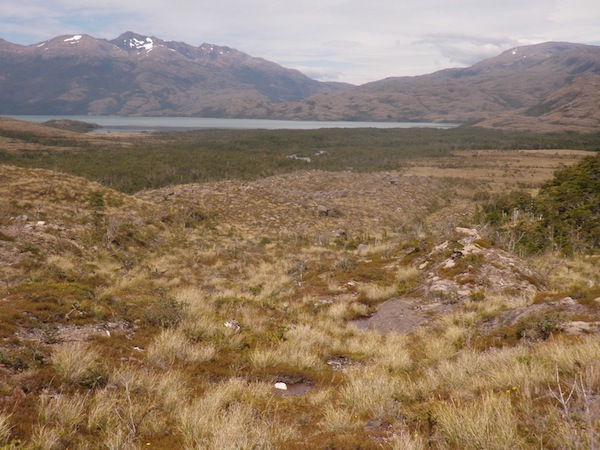
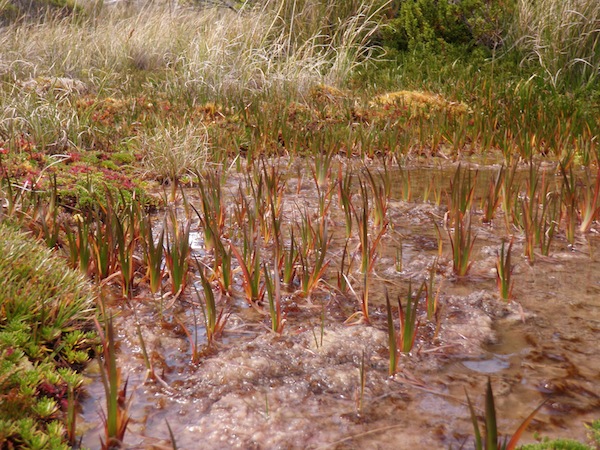
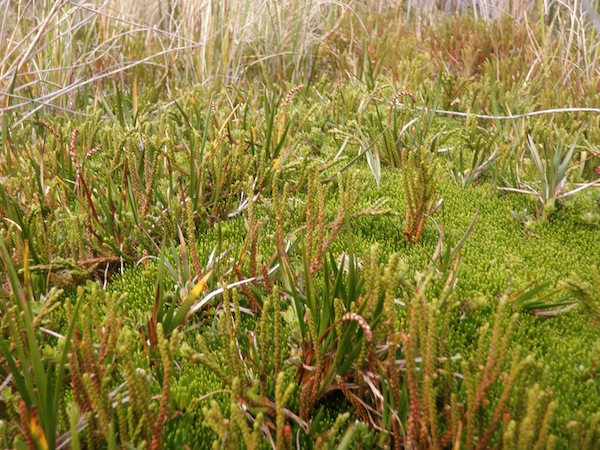
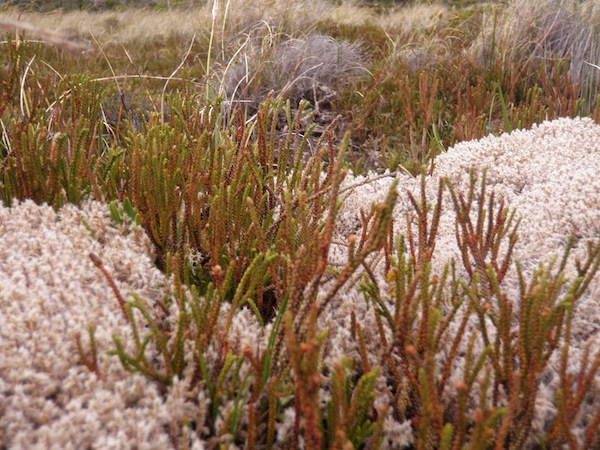
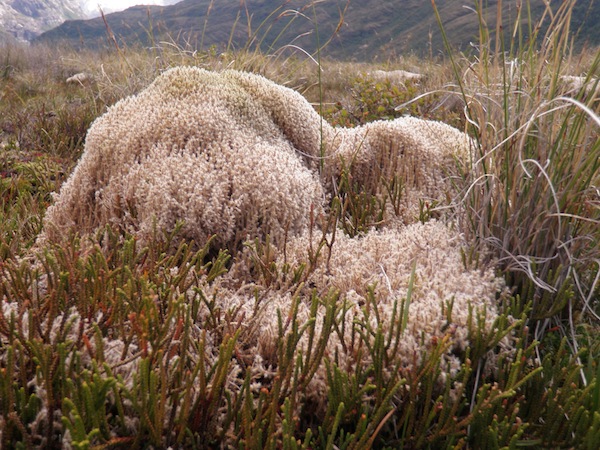
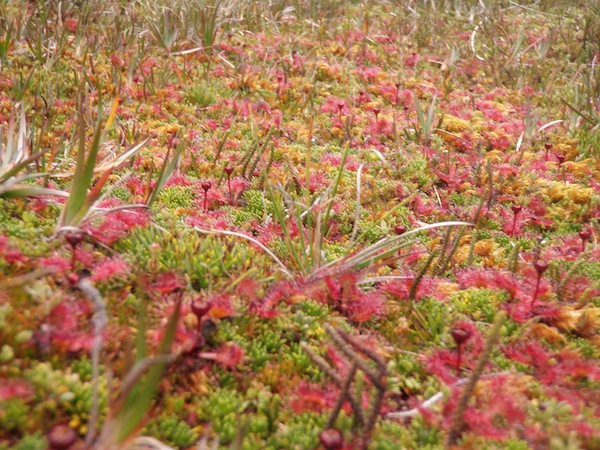
So, why does it take so long to hike in Patagonia? First off, there are no trails. Secondly, there's a lot of water and
water-logged ground full of scrub trees and turba. Here are some photos of the terrain.
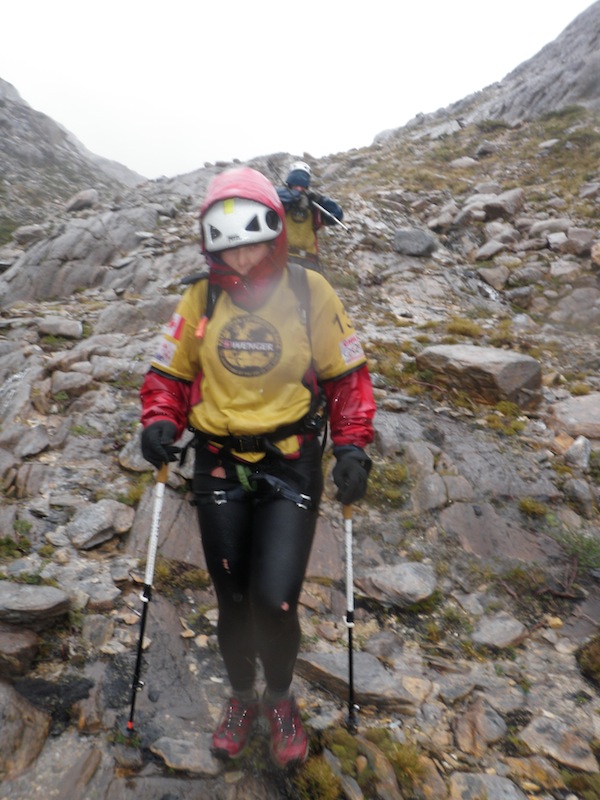
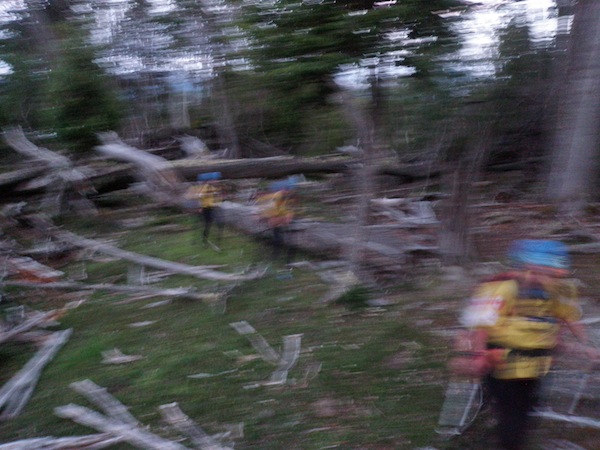
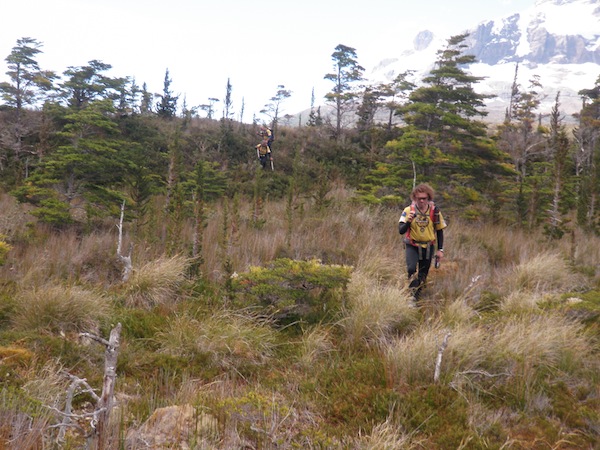
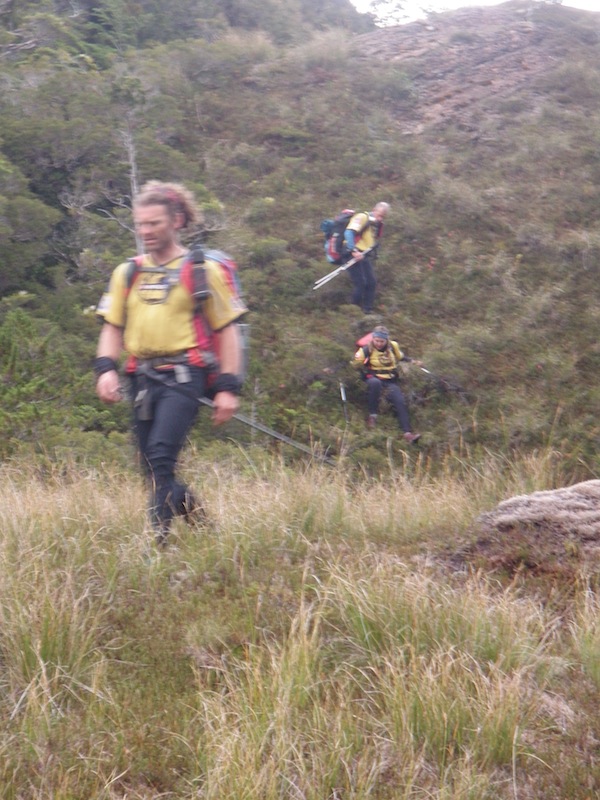
We did see a couple of seals playing in the fjord as we walked along. We even
stopped and watched them for a bit. It was a nice break from bushwhacking.
As we approached CP7, the last bit was around a small bog/bay. We ended up
hiking the last kilometer in knee-deep water.
11-Feb: Still Trekking
CP7 to CP8 was the last bit of the trek and another mountain pass crossing. We
desperately needed sleep, but race officials said we needed to leave by 2am, or
not go. We slept a brief 45 minutes and after discussing how stupid it was to
begin a 10km by first crossing a glacial river (over our heads) and then hiking
up to a mountain pass. To make matters worse, Masha was very lackluster at
this point. Her lack of Synthroid was taking its toll. She had no energy at
all.
So, after a brief discussion, we decided to risk it. A couple of photographers
(Tony and Ignacio) decided to follow us for safety reasons. (Thanks guys!) It
turns out the the river crossing woke us up and we got another rush climbing a
100m wall of turba. We hiked up the forested plan all night and arrived at the
pass at dawn. Amazingly, we passed East Wind along the way and caught up to
Perdidos as well. They'd been struggling in the mountain pass all night looking for
a way over. Our friend, Peter Jolles (of Perdidos) was understandably frustrated.
So, three teams and two phtographers all ascended the pass together at sunrise.
It was going well until Masha slipped and fell about 15 feet. If Tony hadn't
stopped her, she was in for a much longer ride. She was a bit shaken, but
determined to go on. So, Pete climbed to the top and we rigged up a safety
rope and belay. 2 hours later, we crossed the pass (the other teams had gone
on) into a rain and wind storm. We battled a head wind all the way down the
mountain to CP7. We were certain that we'd be out of the race at this point.
Masha was moving slower and slower and we had heard that we needed to be to the
kayaks by 10am. We arrived at noon. The hike down was spectacular. All the
rain made for dozens of waterfalls along the way. Unfortunately, we were
walking in a bit of it - usually 2-4 inches of water running off the mountain.
Aside from being completely soaked, it was an enjoyable descend.
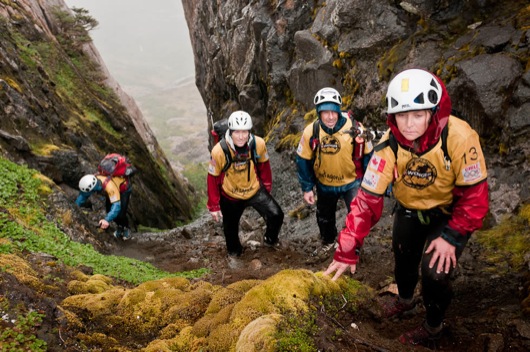
Climbing Over The Second Mountain Pass
Luck was on our side and we were told we could go on, but we had to leave
immediately. Yikes. We still needed sleep. And some hot food.
Stage 4: 60km Kayak (CP8- CP9)
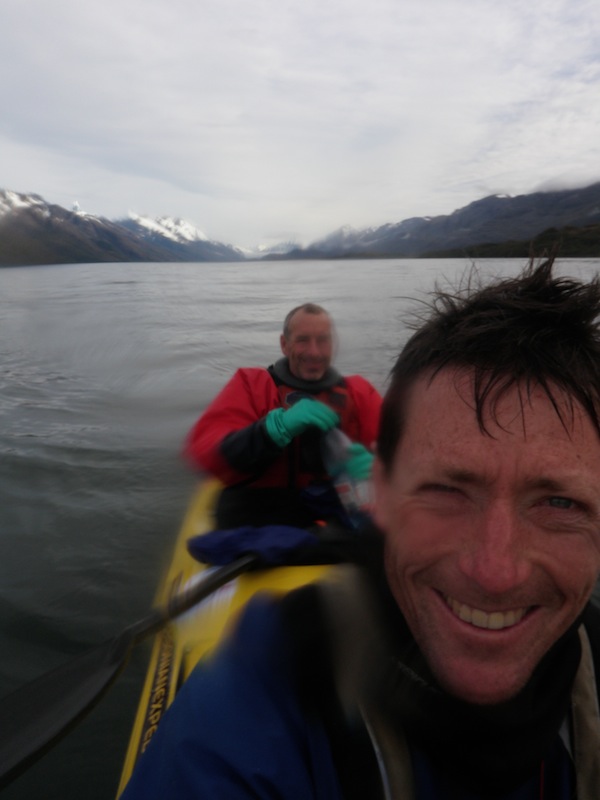
We began the kayak down the Fiordo de los Montanas right before 2pm. We had to
make it to the end by 10pm or we'd be out of the race. The first 30km, we had a
nice tail wind and made it in 3 hours. We thought we might actually make it.
Not that it mattered, because we couldn't start the last trek unless Masha got
some medication. Very unlikely at this point.
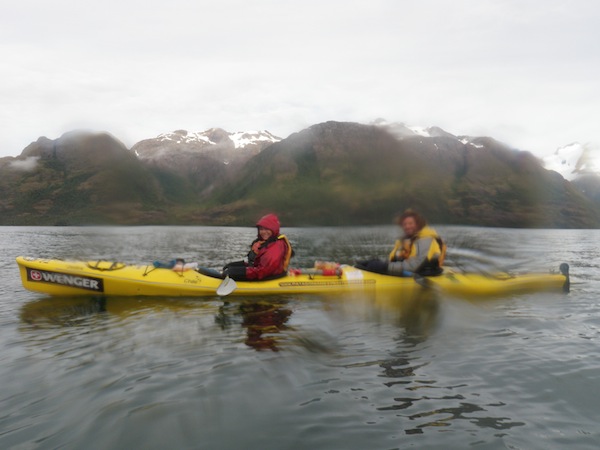
Noel paddled with Masha in one boat and Pete and I were in the other. Masha
mostly slept through the entire paddle. Noel did an amazing job of solo
paddling and still outpacing me and Pete.
We reached at the halfway point for a quick stop. When we got back into the
water, the wind had changed. We now were paddling into a 4km headwind. Our
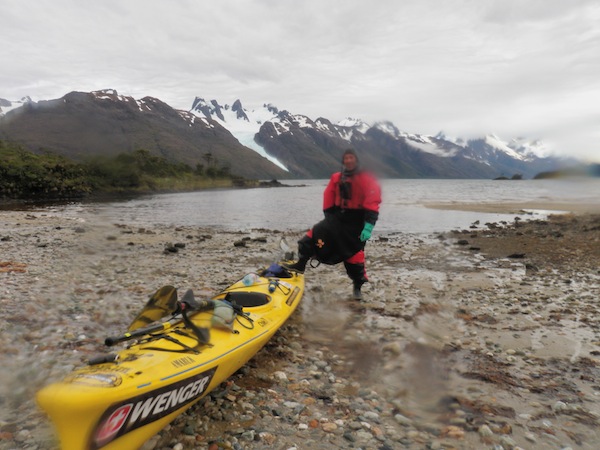
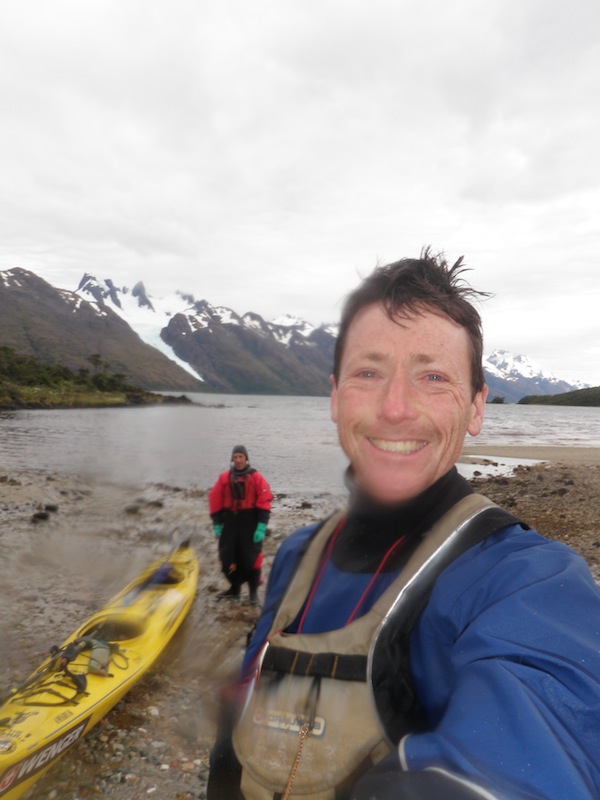
speed plummeted and we knew we'd never make it to the end. So, around 9pm, we
found a nice campsite on a beach and pitched the tent. We immediately put
Masha into the tent in her sleeping bag and then cooked up some hot food for
everyone. We had a great night on the beach - glaciers across the fiord from
us and nothing else around. We were asleep by midnight and didn't bother
getting up early.
12-Feb: Our Race Ends At Noon
We got underway the next morning around 9am. We'd already called CP9 using the
satellite phone so they knew we were all right. 3 hours later and we were at CP9.
Our race was over. We pitched the tent and put Masha back into it. I think
she slept for the next 36 hours.
We caught a ferry around 6pm back to Puerto Natales and an RV back to Punta
Arenas. We got back to La Casa Escondida at 2am and went right to bed.
The Rest Of The Field
We ended up in 8th place. Five teams never finished the first trek.
The second trek pretty much fell apart. Because of a big storm with high winds and lots of rain, the last 120km of the trek was cancelled.
Team Adidas made it to CP11 - about 65km into the trek. Gear Junkie made it to CP11 as
well, but somehow missed CP10 along the way. Vaucluse, the French team, made it to CP11
a day after Adidas as did Ad Natura - the Croatian team. So, 4 teams completed the full (but shortened) course.
East Wind, Perdidos and Roadrunners (the Danish team) were all airlifted fro somewhere between CP9 and
CP10 to CP11. Apparently, a swollen river was blocking their path and they
couldn't find a safe way across. Roadrunners dropped out at that point and
were taken by helicopter to the hospital for hypothermia.
The 6 teams still left in the race were all
taken by ferry and then vehicle to CP13 where they completed the last 180km bike leg
of the race.
We truly might have been the lucky ones. After we dropped out of the race and rested for a day, we rented a car and went for 2 full days of
trekking back up in Torres Del Paine!
The end results were:
- Adidas (UK)
- Gear Junkie (US)
- Vaucluse (French)
- Ad Natura (Croatians)
- East Wind (Japan)
- Perdidos (US)
- Roadrunners (Danish) - stopped between CP9-CP10, Airlifted to hospital
- Dancing Pandas (USA) - made it to CP9
- Todo Adventure (Chile) - made it to CP7
- Selva (Brazil) - stopped at CP7
- Four Continents (US, Czech, Australia) - stopped at CP6
- Josiken (Chile) - stopped at CP3
- DAP Antarctica (Chile) - stopped at CP3
- Xingu (Brazil) - stopped at CP3
Team Dancing Pandas
Some Random Pictures Of The Turba
| 